
Customer Types are classifications used to group customers based on shared characteristics, behaviors, or business criteria. Defining Customer Types helps businesses tailor marketing strategies, reporting, pricing, and operational workflows to different segments. Proper setup ensures consistent categorization and improves customer targeting and analysis.
To check or create Customer Types:
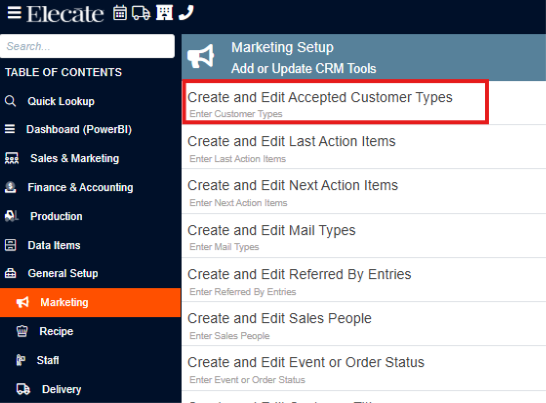
- On the side panel go to General Setup
- Select Marketing

3. Click on Create and Edit Accepted Customer Types
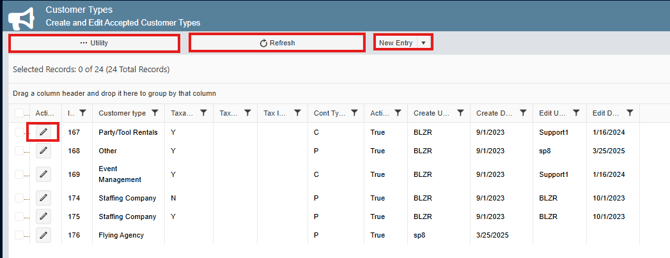
4. This is how the Customer Types window looks, here you can create a new entry, edit the current information, check the utility and edit the information, reset state.
-
Field Definitions:
Customer Type Name
- Definition: The label used to identify a customer category
- Purpose: Helps distinguish different customer segments
- Best Practice: Use clear and descriptive names (e.g., “Retail Customer”, “Corporate Account”)
Description (if available)
- Definition: Additional details explaining the purpose of the Customer Type
- Purpose: Provides context for other users when assigning types
- Best Practice: Include criteria or intended usage
Active/Inactive Status
- Definition: Indicates whether the Customer Type is currently in use
- Purpose: Prevents outdated classifications from being assigned
- Best Practice: Deactivate instead of deleting to preserve historical data
Utilization Check
- Definition: Displays where the Customer Type is being used in the system
- Purpose: Helps assess impact before editing or removing
- Best Practice: Always check utilization before making changes
Reset State
- Definition: Reverts unsaved changes or restores original values
- Purpose: Prevents unintended modifications
- Best Practice: Use when reviewing or canceling edits
Best Practices:
- Avoid too many overlapping categories
- Use mutually exclusive types when possible
- Align Customer Types with reporting and analytics needs
- Keep naming standardized across the organization